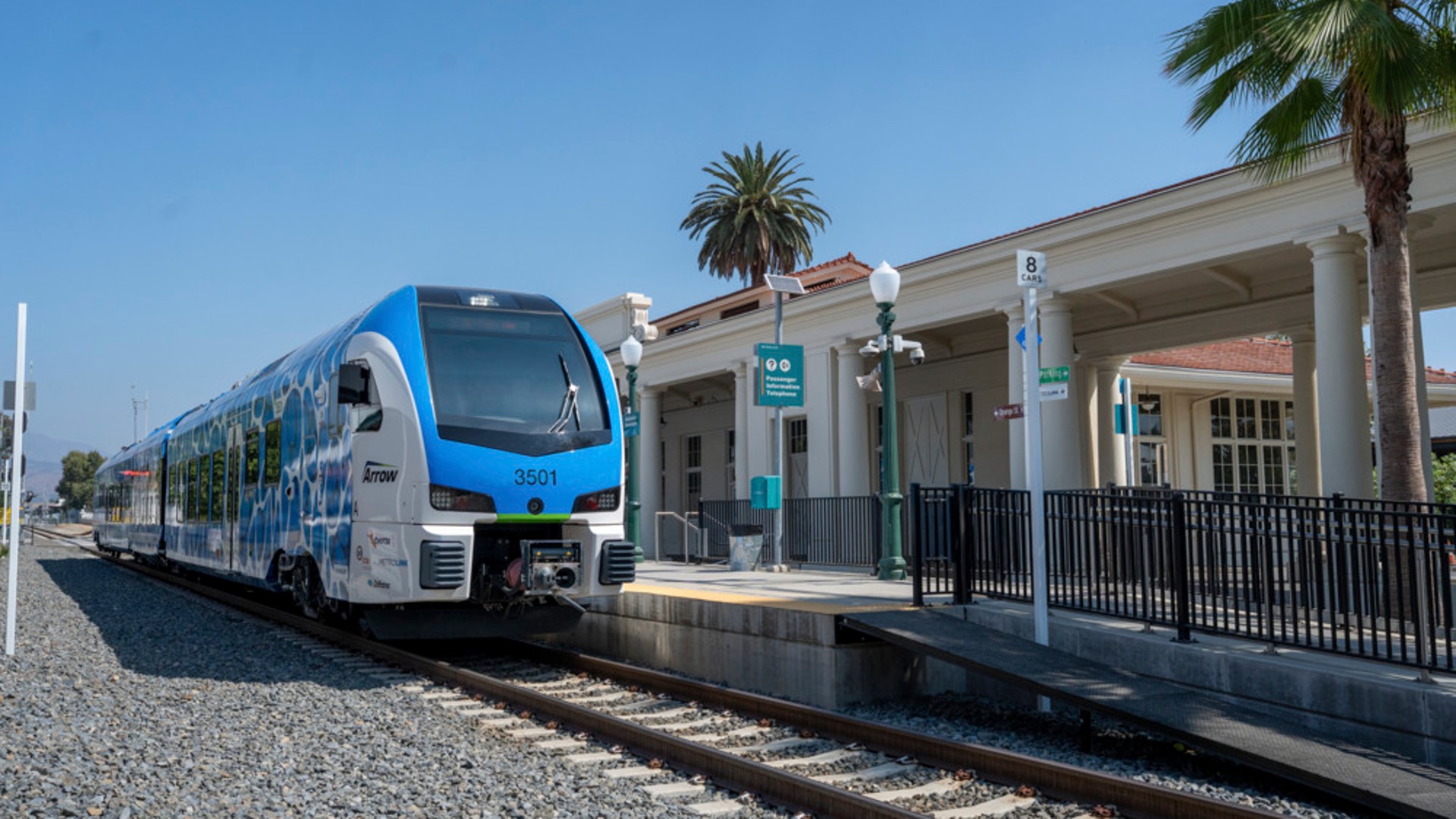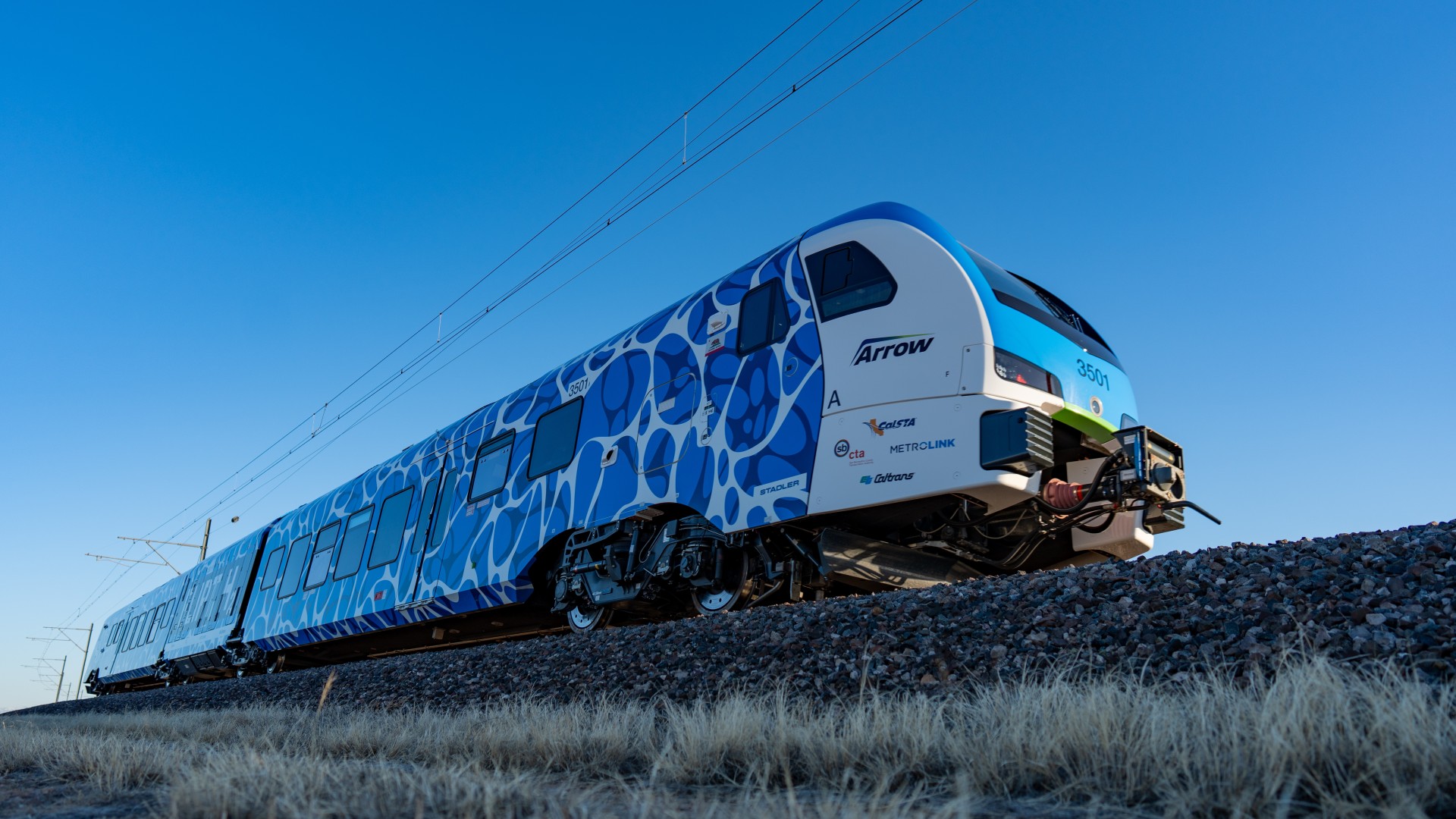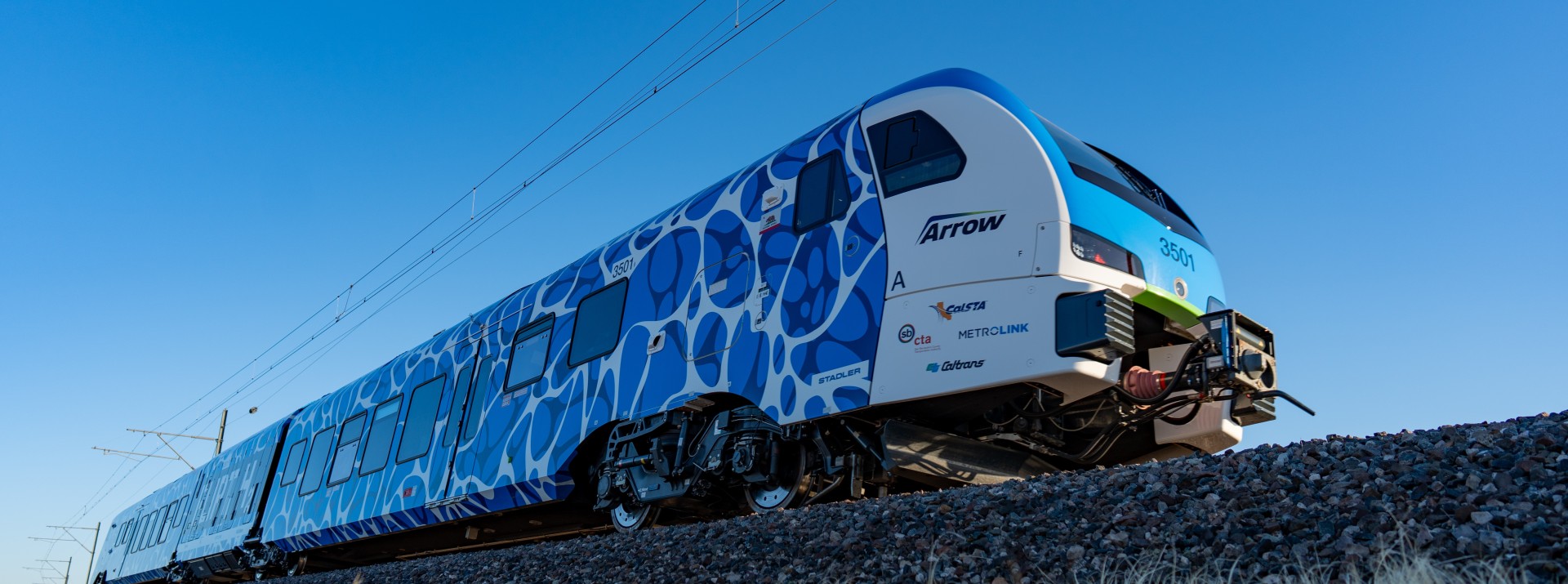
Stadler developed the FLIRT H2 electric hydrogen train as an emission-free alternative to diesel-powered vehicles on non-electrified routes. This enables the San Bernardino County Transportation Authority (SBCTA) to transition its existing rail network to sustainable operation without extensive infrastructure upgrades. A key contributor to this success story is Selectron's future-proof, long-lasting, and easy-to-integrate platform.
The Challenge
Rail transportation in North America remains largely diesel-powered, with only a small portion of the network electrified. At the same time, regulatory requirements and public demand for more sustainable mobility solutions continue to increase. Many U.S. states are pursuing ambitious targets to significantly reduce or even eliminate carbon emissions from public transportation. However, electrifying existing rail networks requires substantial investments in overhead lines and substations, as well as long implementation timelines. The challenge was to introduce an environmentally friendly alternative that could be deployed more quickly while leveraging existing infrastructure.
Info
Key Facts
- Manufacturer: Stadler Rail
- Operator: San Bernardino County Transportation Authority (SBCTA)
- Country: USA
- Vehicle Category: FLIRT H2 Hydrogen Train
- Project Type: New Vehicle Development
- Commissioning: 2024 world-record run, 2025 start of regular passenger service
- Selectron Products: SCPU 941-TW, SmartIO I/O Modules
The Solution
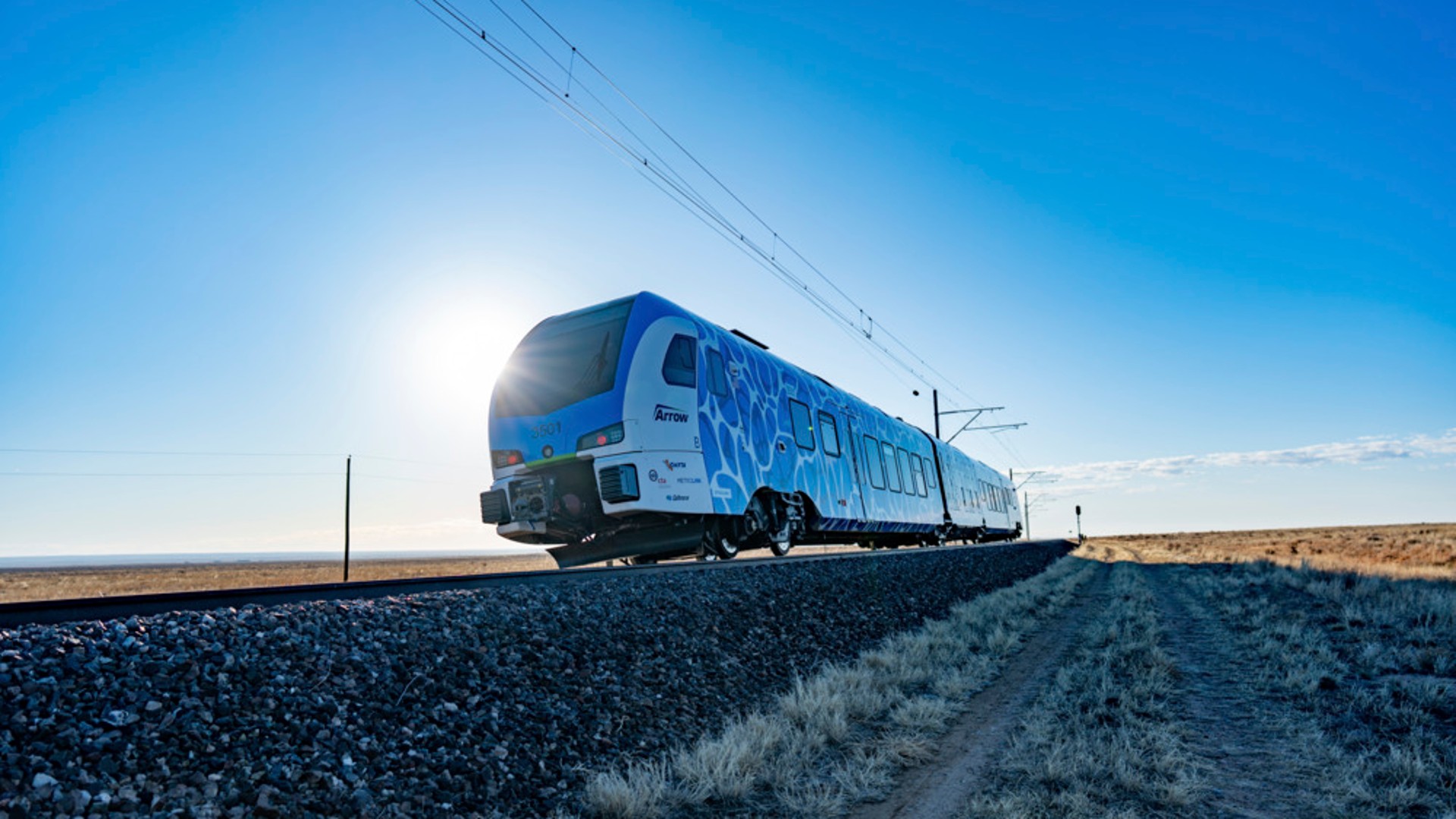
To address this challenge, Stadler developed the FLIRT H2 multiple-unit train powered by hydrogen fuel cells. The hydrogen-based propulsion system enables emission-free electric operation on non-electrified routes. The first FLIRT H2 train for SBCTA consists of two end cars and a modular powerpack positioned between them, housing the hydrogen fuel cells and storage tanks. The fuel cells convert hydrogen into electricity, which is supplied to a traction battery. The battery then powers the train's propulsion system while also enabling energy recovery during braking. The train's record-breaking journey of 2,803 km without refueling demonstrates both the efficiency of the overall system and the suitability of hydrogen technology for everyday passenger operations.
For the FLIRT H2 project, it was essential for us to rely on a proven and easily integrated solution such as Selectron's. Especially when introducing a new propulsion technology like hydrogen, having a mature and robust technological foundation helps us reduce development risks and efficiently realize innovative vehicle concepts.
Martin Ritter – President & CEO, Stadler North America
Our Contribution
A key success factor behind this innovative vehicle concept is Selectron's future-proof and easily integrated platform. For the FLIRT H2 project, Stadler was able to build on Selectron's proven and generic control solutions rather than developing a completely new control system specifically for hydrogen technology. This significantly reduced development risks.
Selectron's platform is deployed in approximately 500 Stadler projects and more than 10,000 vehicles worldwide. It has been successfully used in the rail industry for over 20 years and has continuously evolved to meet new requirements. Its modular architecture simplifies integration into different vehicle concepts while enabling the efficient implementation of new applications.
Added Value
By adopting this pioneering technology, SBCTA can continue using its existing rail network while transitioning to more sustainable operation without extensive modifications to infrastructure.
This reduces dependence on fossil fuels and delivers emission-free operation, long range, and greater long-term planning security. Passengers benefit from a modern, quiet, environmentally friendly, and highly comfortable travel experience compared to conventional diesel trains.
For Stadler, the project's key advantage was the ability to leverage an established control platform. Existing concepts and software modules could largely be reused, significantly reducing engineering and programming efforts while accelerating development.
FLIRT H2 Impressions
For the FLIRT H2, Stadler relied on